Gould's two Goldbergs, 1955 and 1981
Glenn Gould made his name with the Goldberg Variations in 1955 and returned to them in 1981, a year before he died. The two records could hardly be more different.
By Sonatique3 min read
Glenn Gould recorded Bach's Goldberg Variations twice, in the same New York studio, for the same company. The first time, in June 1955, he was 22 and the record was his debut. The second time, in the spring of 1981, he was 48. That record came out on 2 September 1982. A little over four weeks later he was dead.
The two performances last 38 minutes 34 seconds and 51 minutes 18 seconds. The difference in length is the easiest thing to measure, and the least of what changed.
The work
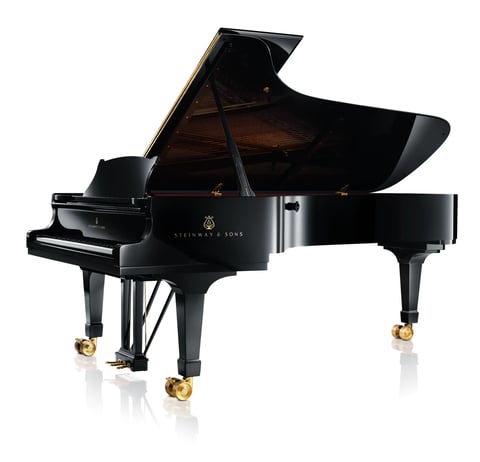
Bach published the variations in 1741, as the fourth part of his Clavier-Übung: an aria followed by thirty variations on its bass line, written for a harpsichord with two keyboards. Every third variation is a canon, at intervals widening from the unison to the ninth, and the thirtieth is a quodlibet built on popular songs. At the end the aria returns, unchanged. Gould played it on a modern Steinway.
1955: the debut
The sessions took place over four days between 10 and 16 June 1955, at Columbia's 30th Street studio in Manhattan, a few weeks after Gould signed his contract. He recorded at least 21 versions of the opening aria before he was satisfied.
What he finally released was fast, bright and lean. He took none of Bach's repeats, and his tempos were extreme enough to make a short record: the quodlibet lasts 49 seconds. The detached, dry touch, each voice sharply cut, made the counterpoint unusually clear.
It became Columbia's best-selling classical album. It had sold 40,000 copies by 1960 and more than 100,000 by the time of Gould's death, and in 2003 it was added to the United States National Recording Registry. Gould grew less fond of it. Interviewed by Alan Rich in 1959, he recalled that he had been "very much in a 'let's get the show on the road and get through with it' sort of mood."
1981: the return
He went back to the work between 22 April and 29 May 1981, in the same 30th Street studio. It was the last album recorded there before the studio closed, and one of CBS Masterworks' first digital recordings.
The new performance is slower and more deliberate. The aria alone takes more than three minutes. Gould now played the first repeat in thirteen variations, the nine canons and the four strict four-part variations, so that the contrapuntal heart of the work stands apart. He also tried to bind the set together by finding proportional rhythmic relationships between one variation and the next, so that the thirty pieces move as one.
The slow 25th variation, the long chromatic lament in G minor, shows how far his view had moved. Of his 1955 account he later said: "I can no longer recognize the person who did that." In 1981 it runs just over six minutes.
The record won the Grammy Award for Best Instrumental Soloist Performance and, in Canada, the Juno Award for Classical Album. By 2000 it had sold more than two million copies.
Which to hear
There is no need to choose. The 1955 record is the sound of a young man announcing himself: quick, witty, almost reckless, and still astonishing in its clarity. The 1981 record is often called autumnal. It is weightier and more inward, and its tempos are held together by a single, considered plan.
The 1981 record also carries the sound of Gould singing along as he plays, and some listeners never make peace with it. One reviewer of the 1981 version predicted that many would "find the groans and croons intolerable." For others it is part of the record's intimacy.
The best way to hear what changed is to play the two arias one after the other. In 1955 it is a prelude to what follows. In 1981 it already sounds like the end of something.